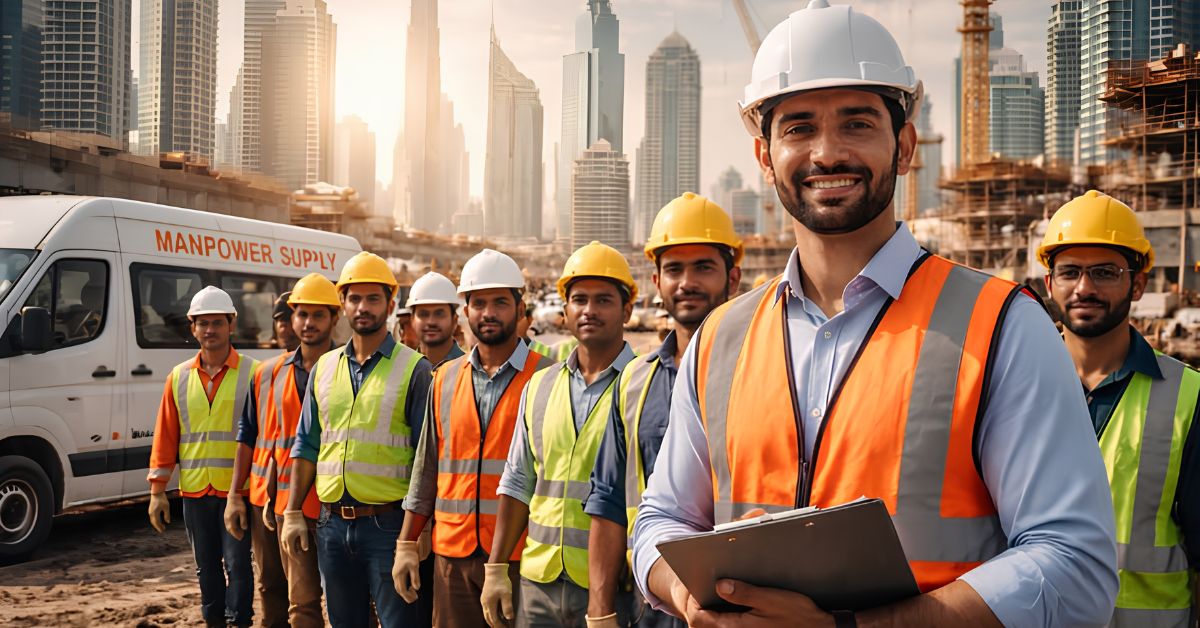
Auckland’s construction sector is busy. The pipeline of projects is strong, but the worker pipeline is not keeping up. Here is how contractors and project managers are adapting, and why labour hire is becoming the default strategy for sites that need to keep moving.
Drive through any part of Auckland right now and you will see the same thing: cranes on the skyline, new subdivisions pushing further south and north, commercial builds stacking up in the CBD and around the industrial belt. The city is growing fast.
The problem is not a lack of work. The problem is a lack of people to do it.
Auckland’s construction industry has been dealing with a chronic labour shortage for several years now. Some of it is structural: an aging trade workforce, not enough apprentices coming through, immigration settings that shifted during and after the pandemic. Some of it is demand-driven: too many projects running simultaneously, competing for the same pool of available workers.
Whatever the cause, the result is the same. Sites slow down. Costs go up. Project managers get on the phone looking for a solution.
Increasingly, that solution is construction labour hire.
What is construction labour hire and how does it work?
Labour hire in the construction industry means a staffing agency employs the workers and supplies them to your site. You direct the work, the agency handles the employment relationship: payroll, ACC, health and safety compliance, and administration.
It is not the same as subcontracting. The workers are placed under your supervision, operating within your site rules and safety systems. The agency just takes on the legal and admin responsibilities of being the employer.
For construction companies in Auckland, this model solves several problems at once. You get workers faster than you could hire them directly. You carry no long-term employment obligation. And you transfer a significant amount of risk back to the agency.
The Auckland labour shortage in construction: what is really happening
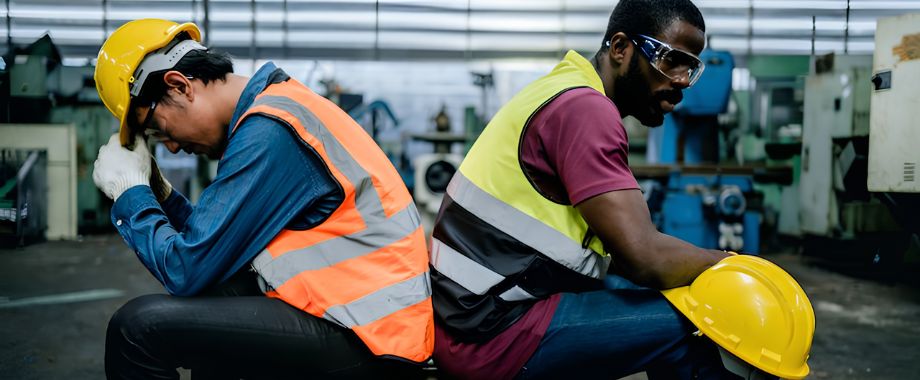
Talk to any foreman or project manager running a site in Auckland and you will hear similar stories. They are not short on projects. They are short on reliable people who can start without a long lead time.
General labourers, scaffolders, traffic management workers, concrete workers, trades assistants: these are the roles that are hardest to fill and hardest to keep filled. Even when companies manage to recruit directly, turnover is high. Workers take a role, do a few weeks, and move on when something better comes up.
The problem with direct hire for these types of roles is that the recruitment process itself is slow. You post a job, sift through applications, interview people, check references, and two weeks later you might have someone starting. In that same period, three other roles have opened up and your project timeline has slipped.
Construction labour hire agencies in Auckland work differently. They already have screened, available workers ready to go. When you call with a requirement, you are not starting a recruitment process. You are making a deployment decision.
What types of roles can be filled through labour hire?
Most construction companies think of labour hire for general labouring roles, but the range is broader than that. Through construction recruitment agencies in Auckland, you can typically source:
• General construction labourers for site support, clean-ups, and material handling
• Scaffolders (both registered and those working under supervision toward registration)
• Trades assistants across plumbing, electrical, and carpentry
• Concrete layers and finishers for foundation and flatwork
• Traffic management and road safety workers
• Demolition workers
• Civil construction workers for roading, drainage, and earthworks
• Site cleaners and logistics support
For specialist trades at journeyman level, direct hire or contractor arrangements tend to work better. But for the backbone labour that keeps a site operational day to day, labour hire is a practical and cost-effective option.
The compliance question: ACC, health and safety, and site inductions
One of the things that puts construction companies in Auckland off labour hire is uncertainty around compliance. Who is responsible if a labour hire worker is injured on site? Who covers ACC?
The answer is straightforward. A legitimate labour hire company in Auckland employs the workers and covers their ACC levies. If a placed worker is injured on your site, the ACC claim sits with the agency as the employer, not with your business. That is a significant risk transfer.
Health and safety obligations are shared. As the site host, you are responsible for the work environment: safe conditions, proper equipment, site-specific hazards. The labour hire agency is responsible for making sure workers are appropriately trained and inducted before they arrive.
At AR Staffing Solutions, every worker placed on a construction site completes a health and safety induction and is briefed on site-specific requirements before their first shift. PPE compliance is checked. Any site-specific safety cards or certifications required by the client are confirmed in advance.
This matters not just for legal reasons, but for practical ones. An uninducted worker on a construction site is a liability and a slowdown, not a solution.
Cost versus Value: is labour hire worth it?
Labour hire charge rates are higher than a direct employee’s hourly wage. That is not a secret and it is not a rip-off. The charge rate covers the worker’s wages, annual leave, public holiday pay, ACC levies, and the agency’s operational costs. When you compare it against the true cost of employing someone directly (which includes recruitment time, payroll admin, leave liability, and turnover risk), the gap narrows considerably.
For project-based construction work where headcount fluctuates by phase, the flexibility of labour hire is often worth more than the cost difference. You scale up for a concreting pour, bring in extra hands for a fitout sprint, then step back down when that phase is done. You are not carrying fixed headcount through the quiet gaps between phases.
The businesses that get the most value from construction labour hire in Auckland treat it as a workforce planning tool rather than a last resort. They are not calling an agency in a panic on Monday morning. They are planning their labour requirements a week ahead and briefing the agency early, which means they get better workers faster.
What to look for in a construction labour hire company in Auckland
Not all labour hire companies in Auckland have real depth in construction. Some agencies cover construction as part of a broad general labour offering, which means their candidate pool is shallow and their understanding of site requirements is limited.
When assessing a construction recruitment agency, ask these questions:
1. How many construction workers do you have actively available right now?
2. What is your average turnaround time for a construction labourer request?
3. What does your pre-placement health and safety process look like?
4. Are your workers ACC-covered from day one?
5. Do you have an after-hours line for urgent site requirements?
The answers will tell you quickly whether you are dealing with a specialist or a generalist in a high-vis vest.
How AR Staffing Solutions supports Auckland construction sites
AR Staffing Solutions works with construction companies and project managers across the Auckland region, from CBD commercial developments to South Auckland industrial builds and residential subdivisions in Flat Bush, Papakura, and Kumeu.
We supply general labourers, scaffolders, trades assistants, traffic management workers, and civil construction crews on both short-notice and planned arrangements. All workers are ACC-covered, safety-inducted, and briefed on your site requirements before arrival.
We also have an after-hours emergency line for situations that do not keep business hours. If a crew member calls in sick at 5am and your site starts at 7am, we pick up the phone.
AR Staffing Solutions provides construction labour hire across Auckland, including the CBD, South Auckland, North Shore, East Auckland, and outer residential growth zones. We place workers on construction sites with same-day and planned deployment. All workers are ACC-covered and fully inducted.
Frequently asked questions:
For general labouring and site support roles, we can often supply workers within 24 hours. For planned project requirements, we recommend briefing us at least 48 to 72 hours in advance to ensure the right people are available.
Yes. Site-specific inductions are a legal requirement in New Zealand under the Health and Safety at Work Act. We brief workers on general safety requirements before placement, but your site induction is still required when they arrive on day one.
Contact us as soon as possible. We will arrange a replacement, and in most cases a suitable worker can be on site the same day or the following morning.
Yes. We handle both short-notice placements and longer planned project crews. We also offer workforce planning support for larger projects, where we can pipeline workers to match your phase-by-phase requirements.
- Construction Labour Shortage in Auckland: Why Employers Are Turning to Labour Hire in 2026
- Temporary Staffing Trends in Auckland: How Businesses Use Temp Staff to Stay Competitive
- Construction Labour Hire in Auckland: How Sites Are Solving the Worker Shortage
- Best Recruitment Agencies in Auckland: What to Look For in 2026
- How to Register with a Recruitment Agency in Auckland: Step-by-Step